
This was not the first time "Wiki" - a widely used, free resource - was appealing for funds. Finally, reports indicated that Google had agreed to pay for Wikipedia content.

FSN E-Commerce Ventures, the parent of Nykaa, has had a roller-coaster ride since listing last November. The initial public offering (IPO) was priced at Rs 1,125 apiece, and the stock listed at a 96 per cent premium, closing the first day at Rs 2,205 apiece. It subsequently hit a high of Rs 2,573 in late November, but has seen steady selling since, hitting a low of Rs 1,208 in May.

In 2019, World Champion Magnus Carlsen was asked to guess the nationality of the reigning world champion in 2050. He responded: 'India will have had many by then!'

Aviation is a juicy target. It's a 24x7 industry, which cannot afford delays or loss of customer credibility.

Lack of access to the cosmonaut training programmes would also be a hindrance for ISRO's planned manned missions, explains Devangshu Datta.

The move towards indigenisation of defence procurement creates new opportunities for India's military industrial sector. The Government of India (GoI) has so far released five lists of items for positive indigenisation - these should be manufactured in India, rather than imported. Each item on these lists represents an opportunity for some local firm.

The key risks against a fast recovery would include long delays in business travel resumption, delays in commissioning, etc.

Operating margins for some companies dipped in Q3, 2021-22 but this sector could be nearing the bottom of the cycle in terms of profits.
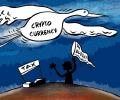
While the tax treatment does legitimise past crypto transactions, there is a possibility that any, or all, private cryptocurrencies will be banned in future.

ISRO hopes to put a crew on the moon, but it has to learn how to keep people alive and healthy in space first.

India remains a young nation, but it will not get younger in future. India has not managed to noticeably improve education. Nor has it managed to create employment opportunities, observes Devangshu Datta.

Figuring out the nuances in the NFT market will mean opening and examining multiple new cans of worms.

Given the economic trends, it might make sense to allocate some savings to gold.

Traders who pay in rupees generate over Rs 50 crore in daily cryptocurrency volumes. Indians actually invest a great deal more in forex-denominated trades, observes Devangshu Dutta, explaining why it is impossible to ban cryptocurrency.

Adversarial Harmful Networks -- India Case Study, cited in Facebook whistleblower Frances Haugen's SEC complaints, revealed, among other things, that Facebook was a preferred platform for 'fear-mongering anti-Muslim narratives' in India, observes Devangshu Datta.

The new malaria vaccine (RTS.S/ AS01, tentatively brand-named Mosquirix) is the very first one to offer immunity against a parasite -- specifically the plasmodium falciparum parasite, which is the deadliest of the five parasites that cause malaria.

The tiny Central American nation of El Salvador has embarked on an interesting experiment by recognising bitcoin as legal tender. This is proving painful for many of its citizens but it's a useful "pilot" project for larger economies that are contemplating the peculiarities of this new asset class. El Salvador has a population of 6.5 million and GDP of about $27 billion.

The hospitality sector has been hit very hard by the pandemic. In the past 18 months, it has lost business, first because of the harsh lockdowns and after that because of lack of demand due to the ensuing economic slowdown. Most hospitality businesses have sustained low revenues and losses since April 2020. Is this the classic case of a beaten-down cyclical sector that may be close to bottoming out?

The OF saga has led to sex-workers looking at cryptocurrency as an alternative, notes Devangshu Datta.

Starting with the third quarter of financial year 2020-21 (Q3FY21), we have seen "unlock" trades at various times. Whenever lockdowns have been eased, traders have taken long positions in consumer-facing businesses. Let's look at the logic. Since March 2020, sectors like retail, personal vehicles, hospitality, aviation, fast-moving consumer goods (FMCG), multiplexes, etc., have been under severe pressure. As a result, there's been a low base effect. Every company in these spaces has suffered top line contraction. Many suffered losses, especially in the first half of FY21.
